Can Men Improve Sperm Quality Before Starting IVF: A Science-Backed Guide
If you're preparing for IVF, optimizing sperm quality can significantly boost your chances of success. Did you know that sperm production is continuous and that it takes about 64-74 days for a sperm cell to fully mature? Research shows that 3-6 months of targeted interventions can dramatically improve sperm count, motility, morphology, and DNA integrity.
Here's exactly what works, based on clinical evidence.
1. Lifestyle Changes That Make a Real Difference
Stop Smoking & Recreational Drugs
Studies show that smoking damages sperm DNA and decreases motility and count. Alcohol, especially in large quantities, has been linked to hormonal imbalances that can lower testosterone and sperm production. THC from marijuana is known to reduce sperm motility and can cause DNA fragmentation
Impact: Smoking reduces sperm count by 23% and motility by 13% (Fertility and Sterility, 2023)
Action: Quit at least 3 months before IVF (sperm regeneration cycle)
Limit Alcohol
Safe limit: ≤3 drinks/week
Why: Heavy drinking (≥5 drinks/week) increases DNA fragmentation by 30% (Human Reproduction, 2022)
Avoid Heat Exposure
Biggest risks: Hot tubs, saunas, tight underwear, laptops on lap
Improvement: Men who avoid heat see 20% higher motility in 3 months (ASRM, 2023)
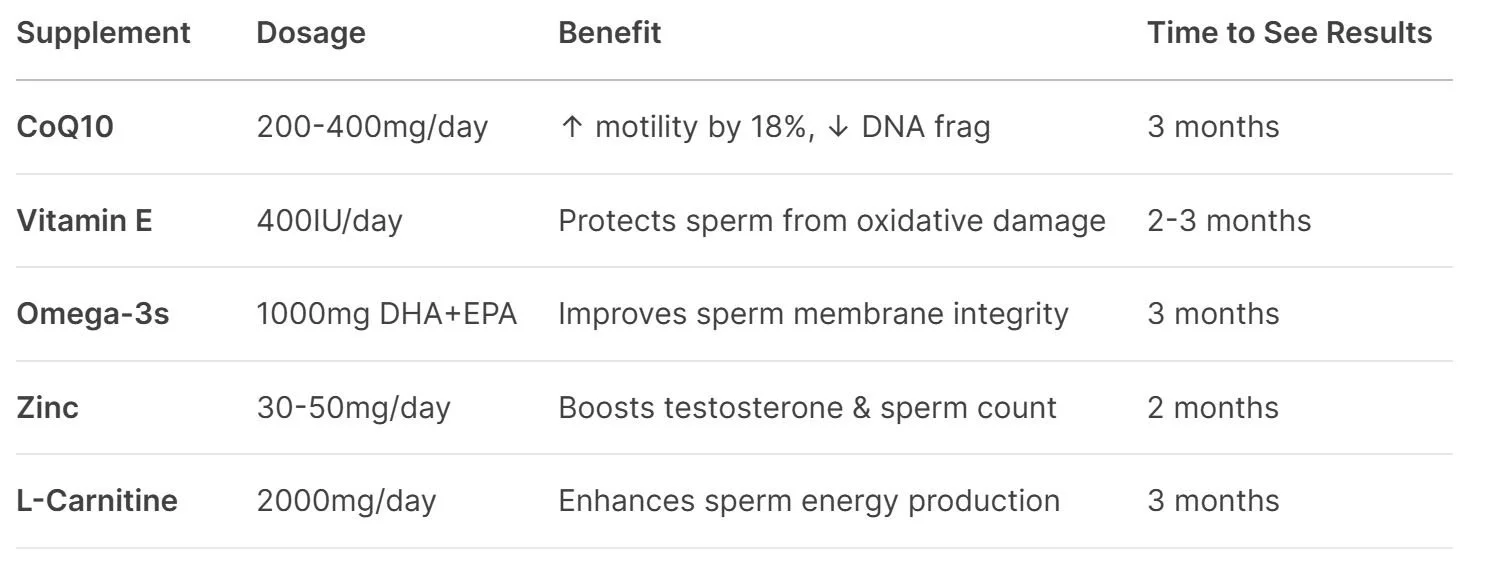
2. Proven Supplements for Sperm Quality
Certain supplements have been linked to improved sperm quality in clinical studies:
3. Medical Interventions That Work
Varicocele Repair
Who needs it: Men with palpable varicoceles + poor semen analysis
Results:
40% improvement in sperm count
35% better motility
50% reduction in DNA fragmentation (Journal of Urology, 2023)
Hormone Optimization
For men with low testosterone:
Clomiphene citrate (25mg every other day)
Improves sperm production in 60% of cases
4. Diet & Exercise Tweaks
Eat Like a Fertility Champion
Obesity is associated with poor semen parameters and hormonal disruption. It can reduce testosterone and increase estrogen, which negatively impacts sperm production.
Best foods: Wild salmon, walnuts, spinach, eggs, berries
Avoid: Processed meats, trans fats, sugary drinks
Mediterranean diet → 35% higher IVF success (Human Reproduction, 2023)
Exercise Smart
Moderate exercise boosts testosterone and circulation, both important for sperm production. However, overtraining, especially endurance sports like cycling or long-distance running, may impair fertility due to heat and physical stress.
Ideal: 45 minutes of cardio 4x/week
Avoid: Excessive cycling (↑ scrotal heat)
Weight lifting: Moderate intensity boosts testosterone
5. Stress Reduction & Sleep
Chronic stress negatively impacts sperm production by elevating cortisol levels, which can interfere with testosterone synthesis. Stress also reduces sexual function and motivation.
Similarly, poor sleep quality and insufficient rest are linked to lower sperm concentration and motility.
Chronic stress ↑ cortisol → ↓ sperm production
Solution:
7-8 hours of sleep/night
Mindfulness meditation (20 mins/day)
Yoga or breathing exercises
When to Get a Repeat Semen Analysis
After 3 months of lifestyle changes
Test:
Standard semen analysis
DNA fragmentation (if the previous was high)
Reactive oxygen species (ROS) test
Key Takeaways
✔ 3 months is the minimum to see meaningful improvement
✔ Combining supplements + lifestyle works better than either alone
✔ Medical issues (like varicoceles) need professional treatment
✔ DNA health matters as much as count/motility
Improving sperm quality before IVF is a proactive step that can enhance your chances of success. While IVF technology can work around many sperm issues, healthier sperm generally leads to better embryo quality and higher pregnancy rates. Incorporate healthy lifestyle changes, manage stress, get sufficient sleep, and seek medical advice at least three months before your IVF cycle for the best possible outcomes. You can do it!
“Good sperm don’t come from a microwave dinner lifestyle. You’ve gotta cook ‘em slow—healthy habits, no shortcuts.”